

Held in Valletta, Malta, on June 30-July 4, 2025, the Digital Games Research Association’s annual conference –(DiGRA 2025) embraced the theme “Games at the Crossroads”, examining how games and game studies operate at points of cultural, disciplinary, and historical convergence. A nexus of Mediterranean trade, migration, and cultural exchange, Valletta was fitting for this exploration of hybridity and transformation in games and scholarship.

For the MEMPOP team, too, the setting offered many opportunities for forming promising new connections and engaging in dynamic discussions.
MEMPOP was featured in the “Regional Histories” stream that showcased comparative perspectives on digital games as cultural artifacts shaped by regional memory, politics, and identity. Natalija Majsova delivered a presentation on indie games that reimagine Yugoslav heritage relying on diverse modes of memory work with distinct intermedial and transmedia dimensions. Through titles like Golf Club: Nostalgia, Space Yugoslav: 2D, and Yugo: The Non-Game, she argued that these games function as a potent counter-archive containting utopias offering insight into the structures of feeling surrounding the Yugoslav past in the 21st century.
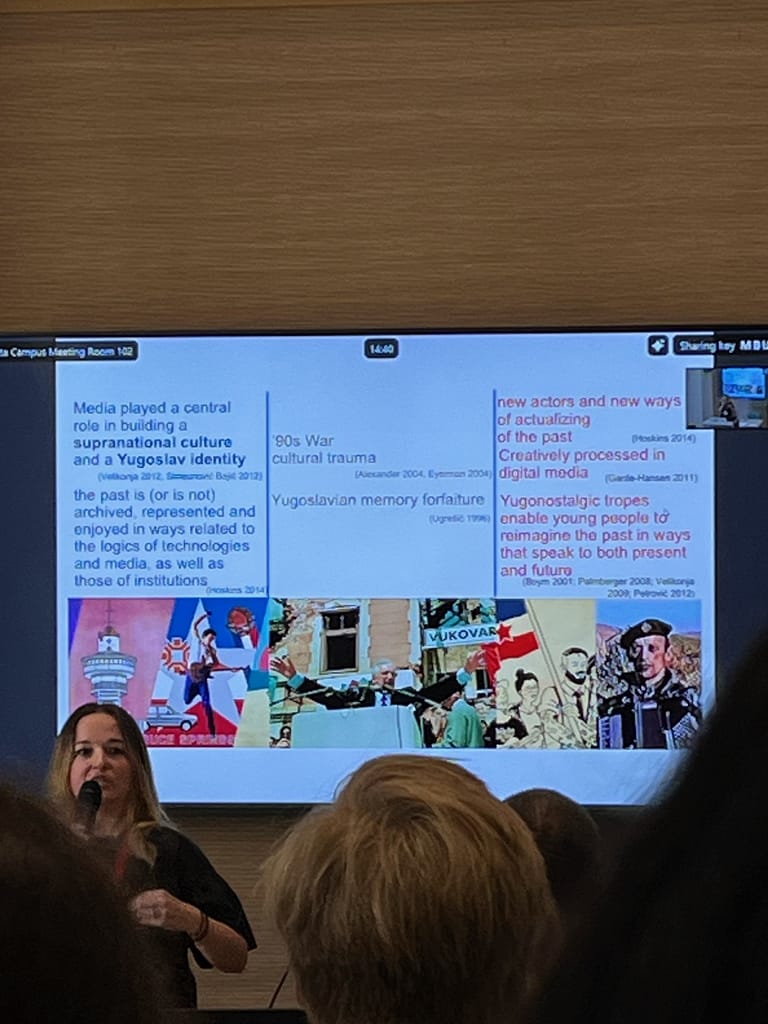
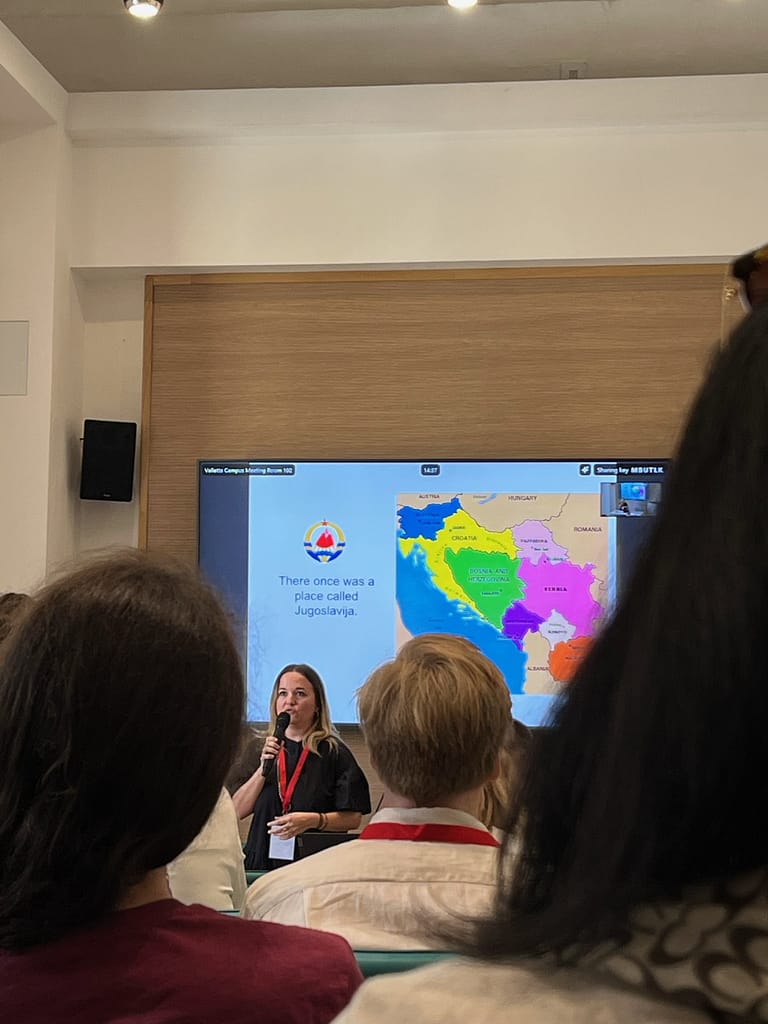
The paper was in productive dialogue Val Caroca Escauriaza’s analysis of Chilean horror games as vehicles of transculturation and Regina Seiwald’s comparative study of East and West German computing cultures in the 1980s. Collectively, the panel exemplified DiGRA’s commitment to global perspectives and intersectional inquiry, offering rich contributions to the field’s reflection on its own position at the crossroads of past and future.
It was also exciting to see that the connection between the memory of the socialist Yugoslavia and games is not only echoed in research focused on more and less distant regions and histories, but is recognized as a timely focus in itself. Thus, Elisabetta Zurovac and Gaia Amadori’s excellent presentation focused on Roblox as a platform for user-generated games depicting the Yugoslav past and its associated collective trauma. Through a mixed-methods approach, Elisabetta and Gaia analyzed the production and reception of these games, examining visual elements in game environments and player discourse on associated Discord channels. They presented a spectrum of representational approaches, from efforts at historical accuracy to uncanny ideologically-driven depictions. By analyzing the interplay of game design, visual symbolism, and player interaction, the study contributes to understanding how digital media shapes collective memory and historical understanding in the post-Yugoslav context.



Leave a Reply